
Our Objective
We seek to improve health status and reduce health disparities in the Carolinas by ensuring all people can access timely and appropriate health care, lead a healthy lifestyle and have their basic social needs met.
The U.S. spends more on health care per capita than any other country but does not achieve better outcomes in terms of life expectancy, health status or patient satisfaction. It fails to provide equal opportunities for health and well-being to all segments of the population. These failures contribute to large disparities in health status and health care utilization based on a range of social factors. Our health care system is designed to provide excellent medical care to the sick; however, it often fails to take a comprehensive approach to preventing illness and supporting wellness.
We seek to improve health status and reduce health disparities in the Carolinas by ensuring all people can access timely and appropriate health care, lead a healthy lifestyle and have their basic social needs met.
Improving health and reducing health disparities will require communities and the health care system to innovate. We look for opportunities to support the development and testing of new approaches that can outperform the current standard of care. These new approaches will require robust evaluation plans that can build the evidence necessary to understand what works and accelerate the systemic reforms necessary to scale and sustain best practices.
Our founder’s keen interest in innovation drives us to consider new ways to optimize person-centered and community-based approaches to improving health. The majority of grants will follow one of our two strategies.

We build coalitions that bring together health systems, public health agencies and community-based organizations to advance programs and policies that promote healthy lifestyles.

We partner with health systems and community-based organizations to identify, develop and test innovative programs that have the potential for long-term scale and sustainability.
Select 501(c)(3) organizations in North Carolina and South Carolina may be eligible to receive funding.
Health Care is piloting a new application platform. To apply for a grant, you will be prompted to login using a Blackbaud ID. If your organization currently uses Blackbaud, please use your existing login credentials. If your organization does not use Blackbaud, please select “create account”. For a step by step process click here.
If you have previously started an application, please select “Edit an Existing Application” to prevent loss of information. If you have not already started your application, please proceed by selecting “Start a New Application.”

Consistent with national statistics, North Carolina and South Carolina have seen children's mental health reach emergency levels. Our Health Care program partners with schools to support innovative, systems-based approaches to mental health that help ensure all children are healthy and ready to learn.

As the United States advances value-based payment methodology, the Health Care program area is building capacity at the state, regional and local level to link government, health, and social services so that Carolinians have the opportunity to increase healthy behaviors and address their social needs.
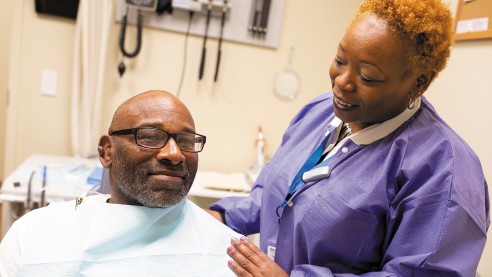
Poor oral health can result in lower quality of life and poor health outcomes. It can negatively impact self-esteem, employability and the ability to learn. The Duke Endowment seeks to improve the oral health delivery system throughout North Carolina and South Carolina to ensure every adult and child has access to essential dental services.

The lack of access to mental health and substance abuse treatment services throughout the Carolinas significantly impacts the health of individuals, families and communities. The Health Care program area seeks to identify service delivery models that promote mental health and well-being for adults, adolescents and children, with a priority on holistic approaches to early intervention and treatment.

Across the Carolinas, too many vulnerable residents lack insurance or go underserved. The Health Care program area seeks to reduce health disparities, improve clinical outcomes and reduce inappropriate hospital utilization by increasing access to essential services for low-income uninsured adults and underserved populations.

The AccessHealth initiative launched in 2008 to reduce health disparities, improve clinical outcomes, decrease avoidable hospital use and expand access to care among low-income, uninsured adults.

February 4, 2026 | Duke University School of Medicine

February 4, 2026 | The Post and Courier Pee Dee

July 14, 2025 | Atrium Health