
Harnessing the Power of Community to Reduce Child Abuse
Family Connects
In 1993, a landmark study from the National Research Council highlighted devastating effects of child abuse on key developmental and health outcomes for children. The report sparked years of inquiry to find effective solutions that could reduce rates of child abuse.
In most communities at the time, child advocates focused on responding to incidents of child abuse and neglect as they occurred, not on preventing them. These responses often followed a pattern: non-profits provided emergency housing, clothing and other essentials to the abused children; social services agencies separated the family and placed children into foster care; the judicial system punished offending parents as criminals. Everyone worked in disconnected silos.
In 2001, Dr. Kenneth Dodge, the first director of Duke University’s Center for Child & Family Policy, responded to an open call for proposals from The Duke Endowment’s Child & Family Well-Being program area. His idea was based on a simple premise.
“No parent has ever been successful alone,” he says, recalling his proposal, “But by connecting them with support from the community, together we can have better outcomes for their children.”
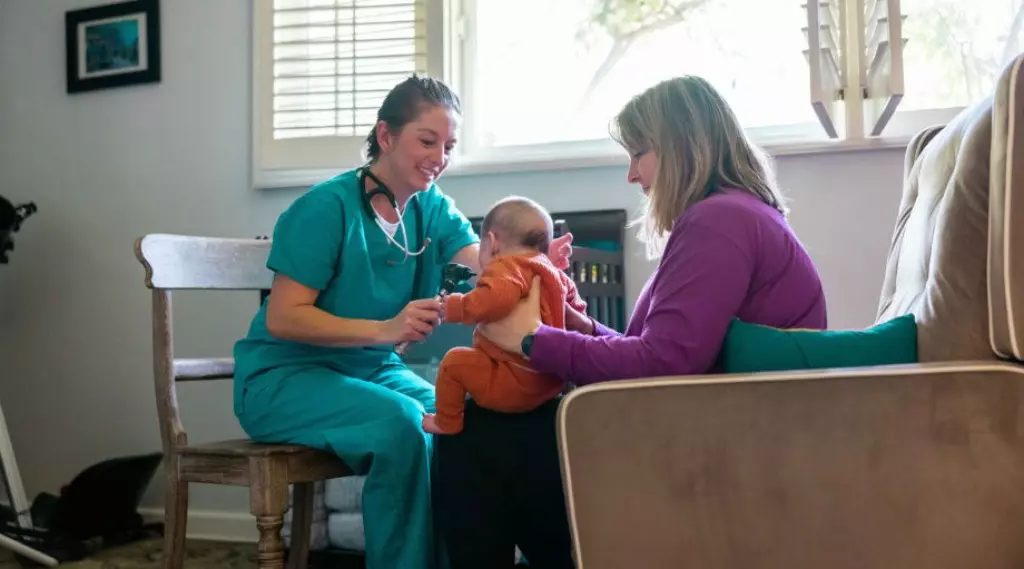
By 2008, Dodge’s idea had become Family Connects, a program focused on reducing child abuse and neglect in the first five years of children’s lives. The Durham County Health Department and the Endowment partnered with the university on the project. “Family Connects is a universal approach to supporting families at birth,” Dodge explains. “Through home visits from nurses to parents of newborns, the goal is to connect families to the support they need to thrive.”
No parent has ever been successful alone. But by connecting them with support from the community, together we can have better outcomes for their children.
Dr. Kenneth Dodge
The Family Connects model is built around home visits at weekly intervals to families with newborns by specially trained nurses. Family Connects nurses are health care professionals and bridge builders to assistance and help available from a network of providers. During scheduled visits, Family Connects nurses assess and monitor the health of the newborn and the mother and work with health providers to provide care, wellness checks and access to needed medical facilities. The nurses are also prepared to work with family members to understand their needs and connect them with counseling, transportation, financial literacy, and other programs, services and supports. These supports help reduce family stresses that can, in turn, create increased risk of child abuse.
In order to gain clarity on what those supports are, Dodge and colleagues went to the most highly qualified experts available… the families of newborns. “Engaging with people in the community first is critical because even the smartest people in the world have not lived in every context in which people that they’re trying to affect are situated,” says Dr. Jen Lansford, the current director of the Center for Child & Family Policy.
Families shared that their needs were diverse. “One family might need a crib, another family might need substance abuse intervention. Yet another family might need job training or parent skills training. So we try to identify their needs and rally the community to address those needs,” says Dodge.
Family Connects remains rooted in its foundational theory that a range of supports from a network of organizations can help lift families with newborn children out of challenges that may lead to child abuse. The theory further holds that if child abuse and neglect are prevented within a substantial number of individual families, positive outcomes for the entire community would be achieved.
Three criteria helped define Family Connects as it moved from idea to implementation in 2008:
- Accountability at the community level for reducing rates of child abuse;
- A goal for achieving a proven, replicable model through a disciplined, iterative process of research, prototyping, testing and measurement within cycles of innovation;
- Rigorous pilot program evaluation through a randomized controlled trial, the gold standard of evaluation frameworks.
In 2012, definitive results from a five-year randomized study of the pilot program published in The Journal of the American Medical Association (JAMA) showed the Family Connects approach to be powerfully effective, with investigations for suspected child abuse and neglect dropping 39 percent.
This data sparked a proliferation of Family Connects programs across the United States. Today, over 61,000 families in more than 40 sites across 17 states have participated in a local Family Connects program. All of the programs include a community advisory board with members who can help find solutions.
“My hope is that 20 years from now, this idea will become universal, bringing support to families in all communities beginning prenatally, at least through school, if not throughout life,” Dodge says. “And that is a revolution.”
Related Posts



A New Mom’s View of the Importance of Child Abuse Awareness Month
April 18, 2022 | Kate A. Gaskin