The “Why” Behind The Duke Endowment’s Rural Church Commitment
The Duke Endowment has invested in rural United Methodist Churches for more than 100 years. We sat down with Robb Webb, director of the Rural Church program area, to ask why that commitment is so important and how the work has changed over the past century.
What is the Reasoning Behind Investing in Rural Churches?
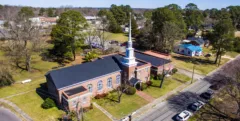
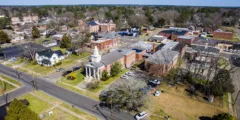
The Duke Endowment has a more than 100-year commitment to rural United Methodist churches in North Carolina, investing more than $475 million since our founding in 1924. There are two reasons for this long-term relationship: our roots and our current realities.
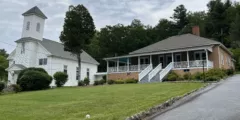
The United Methodist Church (UMC) was an important part of life for our founder, James B. Duke. Seeing the power of churches to build and support communities, he was particularly concerned that churches be built in “the sparsely settled rural districts” because, as he put it, “it is to these rural districts that we are to look in large measure for the bone and sinew of our country.” During the earliest years of the Endowment, funding went to church construction and maintenance in rural communities and to support pastors and their families after retirement.
How Have Rural Churches Evolved?
Over the past century, the opportunities for rural communities have evolved dramatically – and rural churches have as well. Major boosts such as electrification, innovations in communication and civil rights gains have moved communities forward. Challenges such as outmigration, economic downturns in key sectors, the opioid crisis, COVID-19 and natural disasters from hurricanes to wildfires have thrown up significant roadblocks. Through it all, rural churches have navigated the changes not only by tending to their communities’ spiritual well-being, but also in the health, financial stability and psyches of individual community members.
The Duke Endowment has always worked alongside these rural churches, supporting their creative solutions to reach and support their communities in ways that extend far beyond the pulpit. Over the past two decades, rural churches have broadened their spiritual and community reach through partnership and innovation. Key examples include:
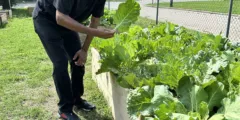
- Churches that have moved from providing emergency nutrition through food pantries to exploring and helping to restructure community food systems,
- Churches that have opened their doors to community children for fun and engaging summer literacy programs led by highly trained teachers to prevent summer learning loss and boost literacy gain, and
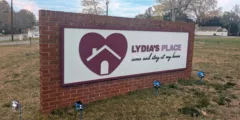
- Churches that have considered new ways to reuse church properties to create transitional shelters, community spaces and even permanent housing.
On a broader scale, we have worked with Duke Divinity School to create and support the Clergy Health Collaborative (CHC), which helps ministers learn about and adopt practices to maintain their own physical, mental, emotional and spiritual well-being so that they can continue to care for their communities.
How Do Churches Demonstrate Meaningful and Measurable Change?
We don’t take it on faith that churches are having a positive effect on their communities. Throughout our relationships with churches, we work together to collect evidence of meaningful and measurable change. Change is meaningful when it resonates with what communities need and want. Change is measurable when we can quantify that people’s lives improve because of a particular intervention.
For example, the CHC offers tools for well-being to clergy, and has used scientific trials to measure the effectiveness of specific well-being practices. Given that the past few years have been particularly trying for ministers as they have dealt with the pandemic, disaffiliation among churches and increasing political polarization within their congregations, the CHC wanted to offer a meaningful way to mitigate stress and anxiety. Measuring outcomes for the use of specific practices, such as Mindfulness Based Stress Reduction and the Ignatian Daily Examen, showed us which practices proved most effective for clergy members. The CHC is now promoting those practices broadly with confidence.
This commitment to meaningful and measurable change drives our grantmaking, so that rural congregations can fulfill their calling to foster human and community development.
What About the Narrative that Says Rural Churches Are in Decline?
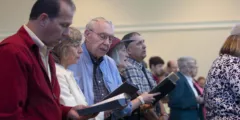
The Endowment’s deep and longstanding history with rural churches tells us that rural churches are in a moment of intentional evolution. We know that pastors and congregants of rural churches care deeply for their communities – and we care deeply for them. As our world seemingly grows more isolating, rural churches are still there, still welcoming all community members for the connection we crave as humans, still engaging in community-enhancing outreach and still working to make life better for all their neighbors. Rural churches remain relevant in an ever-evolving world, and we will continue to learn from and with them in pursuit of a shared vision of strengthening “the bone and sinew of our country.”
Related Posts



Church-based Literacy Camps are Filling a Gap in Summer Learning
July 23, 2025 | Kristen Richardson-Frick, Mebane Rash and Hannah Vinueza McClellan